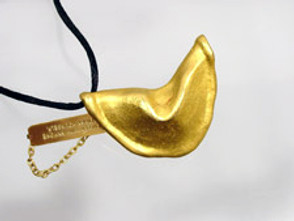
In support of Breast Cancer Awareness Month we have donated a Hattie Carnegie brooch to be raffled off during the 19th annual Tickled Pink event.
Blog
This Saturday is Museum Day Live (Smithsonian magazine). Here in Minnesota, the Minnesota History Center is offering free admission on Saturday. And, they have the exhibit "1934: A New Deal for Artists". Paintings created under the New Deal's 1934 Public Works of Art Program will be on display. The Public Works of Art Program was the first federal program to support the arts nationally. It is also known as the WPA artworks.
The first photo was taken during WPA national arts week. The bottom photo is WPA Walker Art Center in Minneapolis, Minnesota. (This photo is from 1941)
I just uploaded a quick video to show the color changes of alexandrite rhinestones. This Kramer of NY set is the first time I have seen alexandrite rhinestones in person, and I wanted to show the colors on video. The rhinestones vary from a shade of cyan, pale violet, and lavender depending upon the light. My video camera is an older flip - so the resolution is not great, but you can see the colors:
Hobé was founded by Jacques Hobé who was a jewelery designer in France during the late 1800's. The business was passed down through the sons, and William Hobé moved to the United States shortly before the 1920's. Hobé began producing costume jewelry in the United States during the late 1920's - early 1930's, including jewelry for the Ziegfeld Follies.
Hobé sterling pieces shown here in this grouping were produced during the 1940's. Also shown are some beautiful Hobé pieces from the 1960's.
Here is a very detailed baroque pin from the mid to late 1800's- most likely a collectible souvenir perhaps from a Grand Tour of Europe.
At first I was not sure what the tiny hand-painted scene was. It looked like a type of church. The colors are very pretty, and while searching with a loupe, I saw the tiny words Kloster Andechs.
Kloster is German for monastery, and this one is known for it's Baroque church and it's brewery.
Some of my favorite antiques are the filigree necklaces from the early 1900's. Shown are 2 Edwardian filigree necklaces from the early 1900's. The top one is a fancy chain link with gilt filigree pendant and crystal center. The crystal sparkles in beautiful shades of lavender and pink, depending upon how the light catches it. The second necklace features camphor glass with a small diamond center. Edwardian jewelry style is from the 1890's to the 1920's, named after King Edward VII - King of England from 1901-1910. It is probably best known for the lacy filigree.
Did you know that the most popular time of year for wedding proposals is the month of December? Throughout the year I get asked if we have any antique engagement rings.
The most sought after are the Art Deco rings with solitaire diamonds. These are also more difficult to find. The filigree rings were popular during the late 1800's through the 1930's.
We just got in 3 filigree rings from the 1930's, 2 with diamonds and one with a solitaire deep green quartz (emerald green in color).
If you are in Minnesota, you are welcome to stop by to see them in person.
I have been saving my jewelry photography for the past 10 years. I am working on grouping the photos and setting to music. I am still working on my Trifari video, however in the meantime I put together this compilation using bee and butterfly pins set to classical music ("Call to the Dairy Cows" or "Ranz des Vaches") This song is from the William Tell opera, first performed in 1829.
Click here on the YouTube link to view: